Jordan Lee, Collab Ag
After working through a significant number of farm setups with Verge this year, some clear patterns are emerging, and they point to something bigger than just a platform challenge.
The truth: it’s polarising.
Farmers who love Verge, really love it. Those who don’t, really don’t. And the difference rarely comes down to the technology. It comes down to the person using it.
Those seeing the most success came in with a long-term mindset and a willingness to work through early friction. They understood they were building a foundation, not flicking a switch. Those who struggled wanted
immediate results and when things didn’t behave exactly as expected, every required change felt like a failure of the platform rather than part of the process.
But what’s becoming clear is that this isn’t simply about learning new software. It’s about a fundamental shift in how we think about working in the field.
We’re not driving anymore. We’re directing.
The industry is moving toward autonomous equipment. Machines that don’t need someone in the cab making moment-to-moment decisions. Machines that follow a plan.
That changes everything about what the person running the operation needs to do.
The mindset shift is this: you’re no longer an operator, you’re a director. You’re not guiding a machine through a paddock in real time, you’re telling a robot how you want the job done before it starts. That requires planning. It requires knowing what outcome you want and designing the system to deliver it.
Without that planning? You get a poor result. Every time. The machine will do exactly what it’s told and if it hasn’t been told well, that shows up fast.
This is not a criticism of farmers who are finding the transition difficult. It’s a signal about how we need to be introducing and supporting these tools and honestly, how platforms like Verge need to evolve to meet operators where they are.
CTF and autonomy are made for each other, but only with the right setup.
Controlled traffic farming is one of the most compelling use cases for autonomous equipment there is. Defined lanes, consistent wheel tracks, precise repeatable passes, everything about CTF demands the kind of accuracy that autonomy delivers better than any human operator.
But it only works if it’s designed properly from the start. You cannot retrofit good, controlled traffic. The lanes need to be planned, the equipment needs to follow them precisely, and everyone involved needs to be working from the same system.
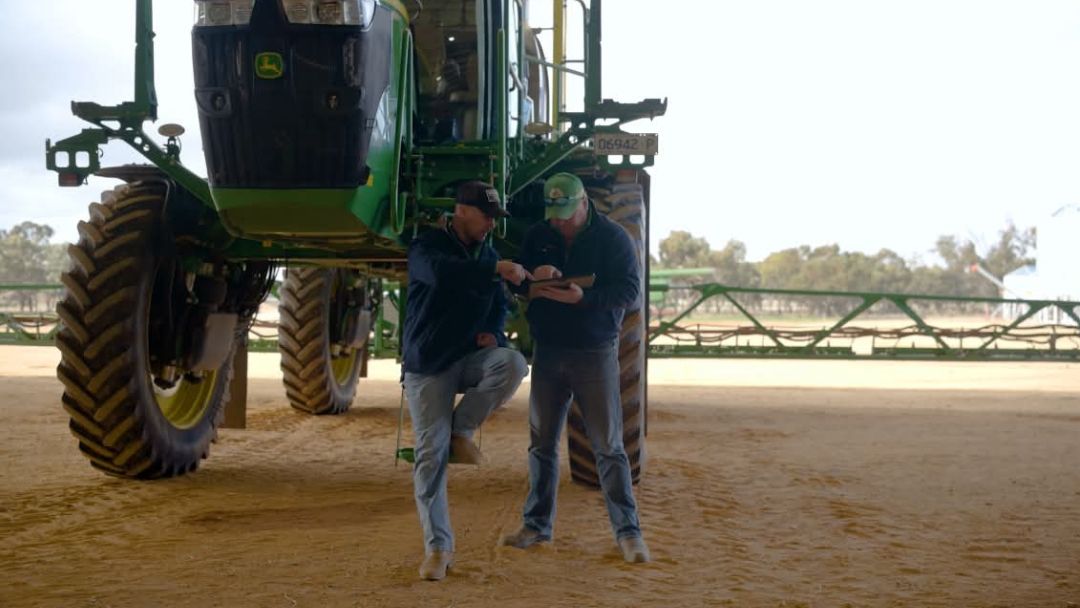
This is exactly what platforms like Verge are built for. The vision is straightforward: the operator picks up their iPad or tablet, designs how they want to move through the field, and sends that route wirelessly to the machine via API connections with John Deere Operations Center, CNH Field Ops or TrimblePTx. The equipment executes the plan. The operator manages outcomes.
That wireless connection between tablet and machine isn’t a nice-to-have feature. In the context of autonomous CTF, it’s the entire value proposition.
The platform still needs to close the gap
For this to work at scale, the tools need to be intuitive enough that the person directing the operation, whether in the cab, at the headland, or eventually from a desk, can design routes, adjust plans, and push updates to equipment independently and confidently.
Right now, too much of that still flows back through consultants. Every preference change, every adjustment. That’s not scalable, and more importantly, it keeps the operator in a passive relationship with their own system. Ownership of the plan needs to sit with the person doing the job.
A holistic approach is what separates the success stories.
The farms getting the most from their CTF and autonomy setup aren’t treating any single platform as a standalone tool. They’re thinking about how everything connects, how field planning integrates with broader farm data, how the whole team works from the same information, and how decisions made today build toward better outcomes across future seasons.
That long-term, holistic thinking is what turns autonomous equipment from an expensive experiment into a genuine competitive advantage.
The bottom line.
The technology is ready. The equipment is getting there. What’s lagging is mindset.
Farmers who will thrive in the next decade are those who start thinking like directors now, who understand that planning is the job, and that a well-designed autonomous system consistently outperforms even the most skilled reactive operator.
CTF is the structure. Autonomy is the execution. But neither delivers without the planning and the mindset to back it up.